India's Trusted Conveyor Solutions Partner — 40+ Years of Expertise
+91-9323588809 | sales@conveypro.in

ConveyPro Systems · Industrial Pumps
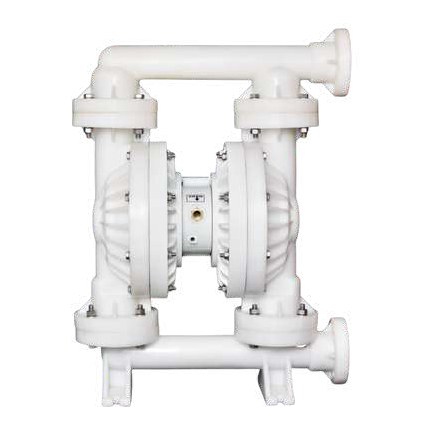
Seal-less, self-priming pumps driven by compressed air, for acids, solvents, slurries and liquids with solids, in aluminium, SS, PP or PVDF.
Also known as: AODD pump, Diaphragm pump, Air diaphragm pump, Pneumatic diaphragm pump, Double diaphragm pump
An AODD pump has two flexible diaphragms linked by a shaft. Compressed air pushes one diaphragm while the other draws liquid in, then an air valve swaps the stroke. There is no rotating shaft seal to leak, the pump primes itself, and it can run dry without damage, which is why it is the usual answer for acids, solvents, slurries and liquids with solids.
Because the pump is moved by air, it is also easy to control: close the air valve to stop, throttle it to slow down. It stalls against a closed discharge without harm. It needs a compressed-air line, and it gives a pulsing flow rather than a smooth one.
It is the wrong answer when you need a steady, high-volume flow at low cost per litre (a centrifugal pump uses far less energy), or when the liquid is very hot or very viscous for the diaphragm. Air consumption is the running cost.
| Part | Choice | Typical fit |
|---|---|---|
| Body | Aluminium | Oils, paints, inks, many solvents; not for acids or corrosives |
| Body | Stainless steel | Food, pharma, mild chemicals, solvents, higher temperature |
| Body | PP (polypropylene) | Acids, alkalis, many aqueous chemicals; lower temperature |
| Body | PVDF | Strong chemicals and solvents where PP will not do |
| Diaphragm | PTFE | Aggressive chemicals; the usual choice for corrosives |
| Diaphragm | Santoprene | Water-based liquids, abrasive slurries; flexes well |
Always check the liquid, concentration and temperature against a chemical-resistance chart before choosing. If you are unsure, send us the liquid and we will advise.
The head a pump can reach is set by the air pressure you give it. As a rough rule for a pump with equal air and liquid areas, each bar of air supports about 10 m of liquid head, so a pump on about 6 bar air reaches the catalogue figure of about 60 m on water. Flow rises with air supply, but falls as head rises. Pick the pump size from the flow you need at your head, not the maximum. Typical figures only; confirm for your duty.
| Symptom | Likely cause | What to do |
|---|---|---|
| Pump will not prime | Air leak on suction, worn diaphragm, valve ball stuck | Check suction joints, inspect diaphragms and balls |
| Weak flow | Not enough air or air pressure at the pump | Check the air line size, filter and regulator |
| Air exhaust freezes up | Moist air expanding quickly | Use dry air; slow the pump a little |
| Liquid in the exhaust | Diaphragm has failed | Replace both diaphragms and check the liquid for compatibility |
Pumps are chosen by the liquid first and the duty second. Give us as much of this as you can.
| Brand | ConveyPro Systems |
|---|---|
| Models | Four standard sizes: 1/2 in, 1 in, 1.5 in and 2 in ports; larger sizes up to 3 in on request |
| Flow | About 35 LPM (1/2 in) to 586 LPM (2 in) in the standard range; larger sizes up to about 1,100 LPM |
| Discharge Head | Up to about 60 m (air-pressure limited) |
| Suction Lift | About 2 m (1/2 in), 3 m (1 in), 3 - 5 m (1.5 in and 2 in), when dry |
| Solids | Up to about 2.4 mm (1/2 in), 3.5 mm (1 in), 5 mm (1.5 in), 6.5 mm (2 in) |
| Body | Aluminium, stainless steel, polypropylene or PVDF |
| Diaphragm | PTFE or Santoprene |
| Applications | Chemical and acid transfer, Paints, inks, adhesives and solvents, Slurries and effluent, Pharma and food-plant utilities (check the liquid), Drum emptying and filter-press feed |
An air-operated double-diaphragm pump: two diaphragms moved by compressed air pump the liquid, with no shaft seal.
Yes. Without liquid it will run without damage, which suits drum emptying and tank clearing.
About 35 LPM in the 1/2 in size to 586 LPM in the 2 in size in the standard range, with larger sizes up to about 1,100 LPM. Actual flow depends on air supply and head.
Up to about 60 m, limited by the air pressure you supply.
From about 2.4 mm in the 1/2 in size to about 6.5 mm in the 2 in size.
PTFE for aggressive chemicals; Santoprene for water-based liquids and abrasive slurries. Send us the liquid and we will confirm.
No, it pulses with each stroke. If you need smooth flow, fit a pulsation damper or use a centrifugal pump.
It uses compressed air, which is the main running cost. For steady high-volume transfer a centrifugal pump is cheaper to run.
Tell us the area and the liquid before you order. We do not claim hazardous-area certification on this page, so we will confirm what can be supplied for your area.
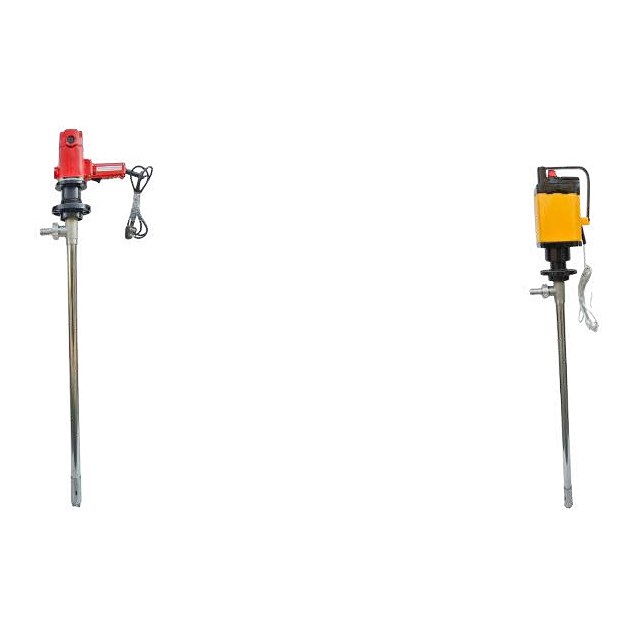
Drum and barrel transfer pumps in SS, PP or PVDF, operated by hand, electric motor or compressed air, for emptying drums of chemicals, oils and solvents.
Details & enquiry →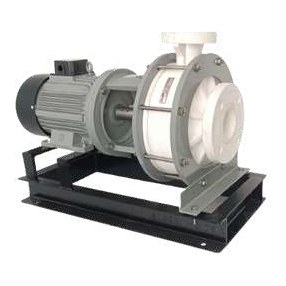
Horizontal monobloc centrifugal pumps in polypropylene for acids, alkalis and chemical transfer, 10 to 55 m3/hr, to 80 °C.
Details & enquiry →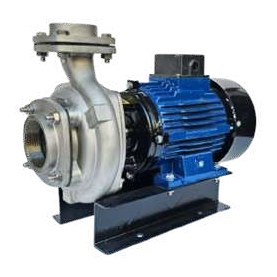
SS-316 monobloc centrifugal pumps up to 2,000 LPM and 76 m head, for food, pharma and chemical transfer, with motors from 0.25 to 20 HP.
Details & enquiry →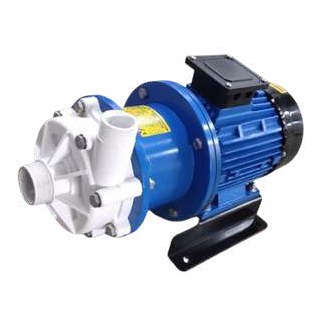
Seal-less magnetic drive centrifugal pumps in glass-filled PP or PVDF, 10 to 750 LPM, for corrosive, toxic and leak-sensitive liquids.
Details & enquiry →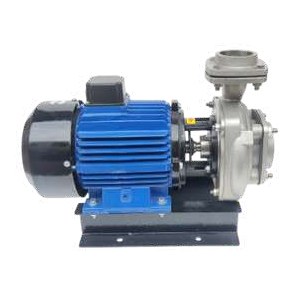
Stainless steel self-priming pumps, up to 80 LPM and 60 m head, with suction lift up to 4 m, single or multi stage.
Details & enquiry →